Posts

Showing posts with the label co Sligo

A tale of ancient times in Sligo

Image
Knocknarea from Strandhill I n the west of Ireland in the modern-day county of Sligo, there stands a mountain overlooking Sligo Bay called Knocknarea. It is an energetic walk to the top from Strandhill near the coast and the top of the mountain is covered in a huge mound of stones, said to hide the tomb of Queen Maeve, famous for her cattle-raiding exploits. The Shanachies had a story about Knocknarea which must pre-date Queen Maeve, who was said to have lived in the 300s AD, about a century before St Patrick. At the time, the native Irish had been joined by two separate bands of settlers, one small and dark from the southern latitudes; and the other tall and blonde who had arrived from the north. I can't vouch for this because I wasn't around at the time. Both of the immigrant tribes built settlements on the coast and all three lived relatively peacefully together. The native Irish at the time still worshipped the sun. The settlers worshipped their own gods, or maybe none but ...
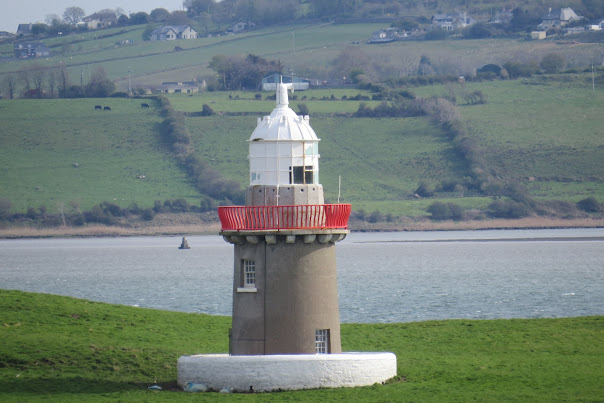
Oyster Island Lighthouse - when it was two

Image
L' Île d'huile, I suppose they might call it in France. I don't really need an excuse to post a picture of Oyster Island. The white wall makes it look like its standing in a saucer. A couple of newspaper reports from the relatively early years of the lighthouses on Oyster Island. Yes, once upon a time there were two lights, which formed leading lights to guide ships up the channel between Oyster Island and Rosses Point on the approach to Sligo. Established in 1837, they were knocked when the channel moved in the 1890s, to be replaced by the lighthouse above.  Griffiths Valuation map showing the positions of the North and South lights on Oyster Island, as well as the unlit Metal Man I'm having little success in finding Mr. Kelly's first name. A Richard Kelly had been AK on Inis Mor (Aran Islands) in 1921. Could have been him, I suppose. A James Kelly was on Tory and Poolbeg in the 1830s. John Kelly was on the Skelligs for many years from 1838 to at least 1856 so it c...